Future Tech Trends Reshaping Industries
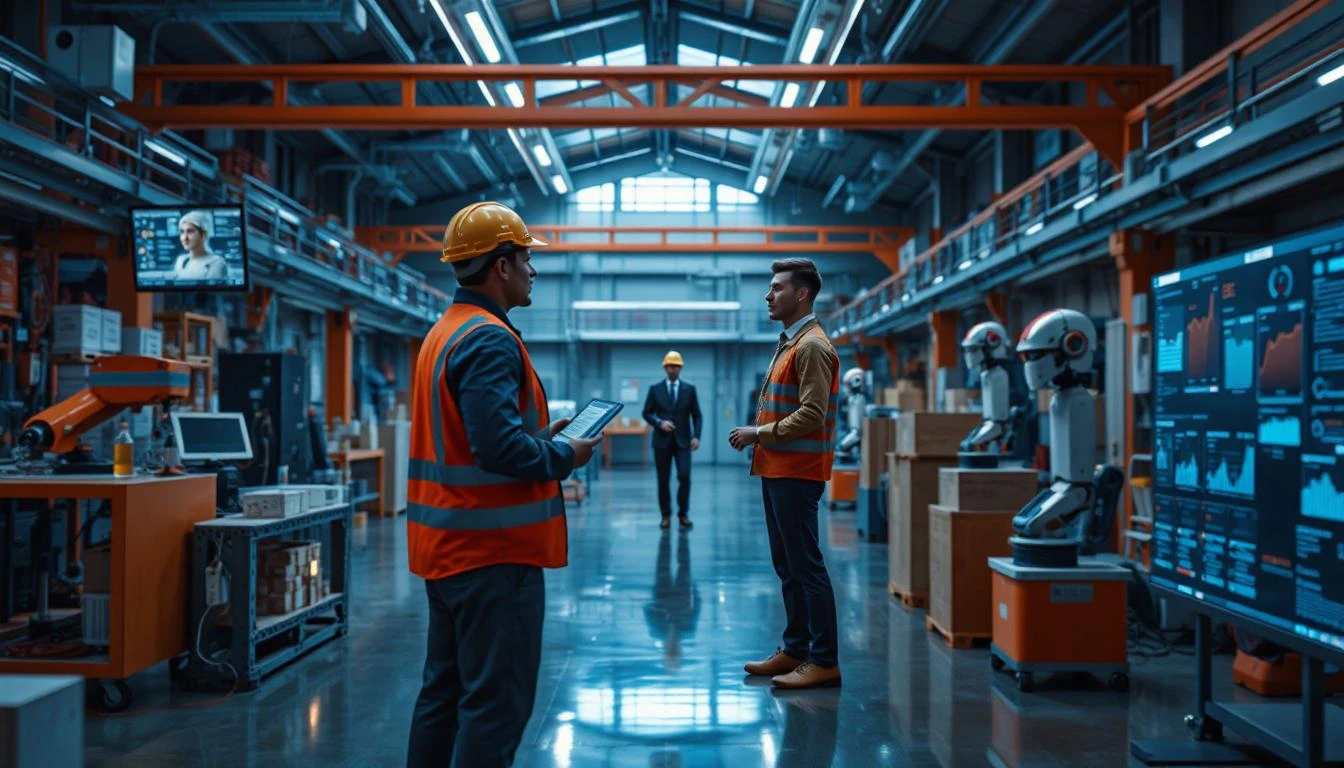
The global digital landscape is shifting faster than most industries can comfortably track, and every layer of business is being reshaped by intelligent systems, automation, and data-driven ecosystems. What once felt like distant innovation is now embedded into daily operations, influencing how companies compete, scale, and survive in an increasingly unpredictable marketplace.
Across finance, healthcare, manufacturing, and especially global digital commerce, transformation is no longer optional. It is structural. It is continuous. And it is accelerating through next generation technology solutions, which are redefining how value is created, delivered, and optimized across interconnected ecosystems.
Emerging Technologies Driving Change
The pace of technological disruption is not slowing down, it is compounding. Businesses are no longer asking whether they should adapt, but how quickly they can integrate intelligent systems before competitors redefine the playing field.
The modern digital economy is being rebuilt from the ground up through AI, automation, and distributed computing models that influence every transaction and decision flow in real time.
AI powered business transformation
Artificial intelligence has evolved into the operational brain of modern enterprises. It powers recommendation engines, predictive analytics, and decision automation in ways that directly influence revenue streams and user engagement. With next generation technology solutions, AI is not just supporting business, it is actively shaping strategic direction.
A growing body of industry research shows that companies integrating AI deeply into workflows achieve significantly higher operational efficiency. As Dr. Andrew Ng once stated, “AI is the new electricity, it will transform every industry.” That transformation is already visible in global marketplaces where AI determines pricing, visibility, and personalization at scale.
Advanced automation across industries
Automation is expanding beyond repetitive tasks into complex decision ecosystems. Supply chains, customer service systems, and financial operations are now orchestrated by intelligent automation layers that reduce friction and increase speed.
In global marketplaces, automation ensures seamless product listing optimization, fraud detection, and inventory balancing. The shift is subtle but powerful, systems now operate with minimal human intervention while maintaining precision at scale. This is where future tech adoption across industries becomes a defining competitive advantage.
Edge computing and real time processing
Edge computing is reshaping how data is processed by moving computation closer to the source of data generation. This reduces latency and enables near-instant decision-making, especially in time-sensitive industries like autonomous systems and digital trading platforms.
Instead of relying solely on centralized cloud servers, businesses are now deploying distributed intelligence networks that react in milliseconds. This shift is quietly redefining what “real time” truly means in a digital economy driven by next generation technology solutions.
Digital Infrastructure Evolution
The backbone of modern industries is no longer static. It is dynamic, scalable, and increasingly intelligent. Infrastructure today is not just about storage or connectivity, it is about adaptability and resilience under constant digital pressure.
As industries expand their digital footprint, infrastructure must evolve to support speed, security, and global interoperability.
Smart connectivity solutions
Connectivity is becoming the nervous system of the digital world. With advancements in high-speed networks, devices and systems communicate continuously without delay. This enables smart cities, autonomous logistics, and interconnected digital marketplaces to function seamlessly.
future tech adoption across industries is heavily dependent on these smart connectivity frameworks, where uninterrupted data exchange becomes the foundation of operational success.
Cloud native technology adoption
Cloud-native systems are redefining scalability. Businesses are moving away from monolithic infrastructures and adopting modular architectures that allow continuous deployment and rapid scaling.
Microservices, containerization, and serverless computing are now standard practices for organizations aiming to stay competitive. This transformation ensures that digital platforms remain agile even under high demand fluctuations.
Cybersecurity innovation trends
As digital ecosystems expand, security becomes a critical layer of trust. Modern cybersecurity is no longer reactive; it is predictive. AI-driven threat detection systems, behavioral analytics, and zero-trust frameworks are now essential components of enterprise protection strategies.
According to cybersecurity expert Bruce Schneier, “Security is a process, not a product.” This reflects how modern systems must continuously evolve to counter increasingly sophisticated digital threats.
Industry Applications and Impact
Technological evolution becomes most visible when it directly transforms real-world industries. From hospitals to factories, digital intelligence is reshaping workflows, decision-making, and customer experiences.
The ripple effect of innovation is no longer confined to tech companies, it is influencing every sector of the global economy.
Healthcare technology advancements
Healthcare is experiencing one of the most profound digital transformations. AI-assisted diagnostics, remote monitoring systems, and predictive health analytics are enabling earlier detection and more personalized treatment approaches.
next generation technology solutions are allowing healthcare providers to transition from reactive treatment models to proactive care ecosystems. This shift improves patient outcomes while reducing operational strain on medical infrastructure.
Manufacturing efficiency improvements
Manufacturing is entering a new era of smart production systems powered by robotics, IoT sensors, and digital twins. These technologies allow factories to simulate, predict, and optimize production processes in real time.
The result is reduced downtime, higher precision, and improved resource utilization. Global supply chains are becoming more resilient as predictive maintenance systems anticipate failures before they occur.
Sustainable technology initiatives
Sustainability is now embedded into technological innovation. Companies are adopting energy-efficient computing, AI-driven resource optimization, and circular production models to reduce environmental impact.
A growing number of enterprises are recognizing that sustainability is not just ethical, it is economically strategic. Green technology is becoming a core pillar of long-term competitiveness.
Explore Future Tech Opportunities Today
The digital marketplace is evolving into a living ecosystem shaped by intelligence, automation, and connectivity. Businesses that embrace transformation early are positioning themselves at the center of future growth, while others risk being left behind in rapidly shifting competitive landscapes.
As industries continue to integrate next generation technology solutions, the boundaries between physical and digital economies are fading, creating entirely new models of interaction, commerce, and value creation. As Satya Nadella once noted, “Every company is a software company now,” and that reality is becoming more visible each day across global markets.